Lecture and workshop on QEEG and Neurofeedback
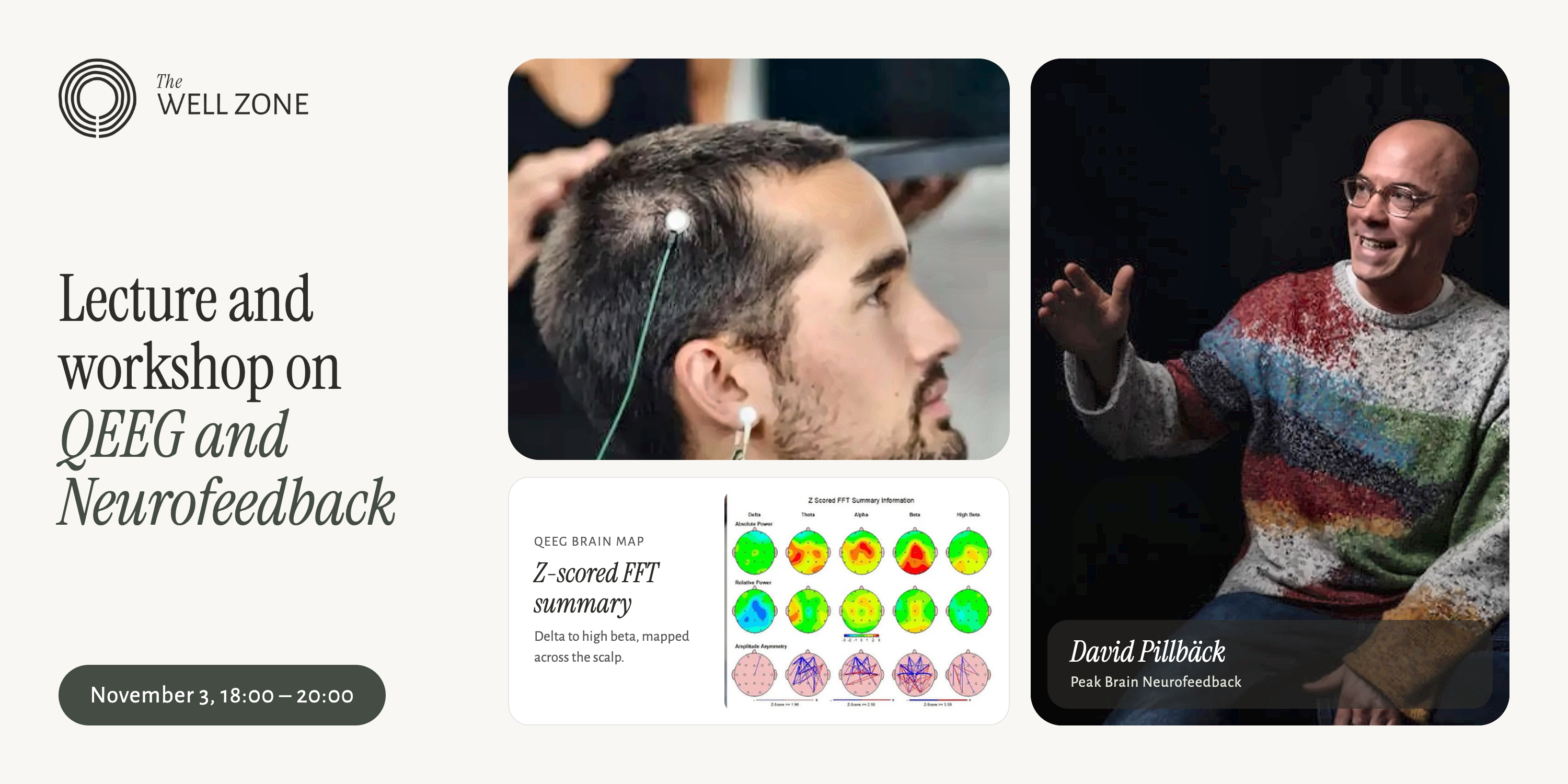
Are you curious about how you can measure and learn more about brain performance?
Many of us believe we perform well, but...
We often have little awareness of what we don’t know. Can we tell when we aren’t sustaining our attention? Can we tell whether we make decisions based on stress, fatigue, impulsivity, scattered attention, or other resource blockers?
This evening will focus on how we can measure and train the brain using qualitative electroencephalography (QEEG).
The brain is an organ. If we have problems with the heart, we want to measure an ECG. If we have problems with the liver, we order a liver panel. If we have problems with the brain, we want to measure the brain to see how it's organized.
The result of the assessment captures our brain signature, also called the phenotype. A second fundamental approach is to train our brain and nervous system for better self-regulation through techniques such as HRV (heart rate variability) training and neurofeedback. All of these techniques share the goal of building the capacity for self-regulation.
Once we have identified the client’s brain phenotype, we can develop hypotheses about how phenotypes drive different behaviors and user experiences for that client. Stress, sleep, mood, and attention are the major dimensions clients are interested in, but also social anxiety, dizziness, sound sensitivity, migraines, obsessiveness, rumination, worry, fear, and avoidance.
Peak Brain Institute takes a wellness perspective on brain training, which means we also measure attention performance alongside the QEEG.
Taken together, this gives a good picture of the challenges and bottlenecks in the client’s brain function.
About Peak Brain and facilitator David Pillbäck:
Peak Brain Institute is one of the most established companies in neurofeedback, with offices in Los Angeles, St. Louis, New York, London, and Stockholm. Over the years, they have trained more than 3,000 people, from 3-year-olds to 90-year-olds, with every conceivable brain and challenge.
We will also bring equipment for recording and brain training, so the evening will be a lecture followed by a workshop where curious attendees can experience the method.
David Pilbäck works as a neurofeedback technician at Peak Brain Institute under Andrew Hill, PhD. Andrew Hill was previously a professor of neuroscience at UCLA and holds a doctorate in neurofeedback. Dr. Hill has written and published 7 books over the past year, and they will be available for sale.
Warm welcome to the Well Zone for this free lecture in Neuroscience.
Doors open at 17:30.
1 Session
- 3 November 2026, 18:00–20:00